Wednesday, February 29, 2012

Mummy laid an egg!

Author: Babette Cole

Children are naturally curious. One question that they really puzzle over is “Where do babies come from?”. Parents need all the help they can get to tell the biological truth in a fun way.

Babette Cole puts a hilarious twist on one of the most difficult yet important discussions necessary in their development. In the book the Mum explains “Girls – sugar and spice and all things nice”. Dad says “Boys, slugs and snails and puppy dogs’ tails”. Suggestions from the adults include “squidge them out of tubes of baby paste”, “make them out of ginger bread”, “grow them from seeds in the green house” and other whimsical nonsense.

The children in the story decide to illustrate with childish drawings the whole baby making process, so that their parents will no longer be as deluded as their silly answers imply.

Some parents may find the sketches unsuitable for young children. You can check it out on YouTube – or borrow it from the Odell Learning Resources Centre. This is a fresh and delightful way to convey some helpful detail about bodies and babies.

Gayle Davidson
Odell Learning Resources Centre

Tuesday, February 21, 2012

The Chemistry of Tears

Author: Peter Carey


I’m a little cautious opening a Peter Carey book. Like many people I found Oscar and Lucinda a rather difficult book to read, with such tortured characters and dense writing. The Chemistry of Tears is a more accessible read (I’m pleased to report) though about another tortured soul. 

The narrator, Catherine, works in a British Museum as a clock and clockwork specialist. The story opens with her arrival at work only to discover that her workmate and secret lover of thirteen years has died suddenly of a heart attack. She is utterly devastated, trapped by the knowledge that she cannot share her grief with anyone. 

It turns out that someone does know… her boss, Eric Croft. With somewhat mysterious motivations, he arranges for her to take on thee extraordinary task of assembling an old automaton (shades of Hugo Cabret). In her grief-stricken altered state, she steals the voluminous notebooks found in the packing box, and we start to read the bizarre story behind the automaton interspersed with Catherine’s increasingly complex reactions to her bereavement, its consequences, and the very strange assistant who Croft provides. 

Not everyone enjoys the “two stories in one” structure, and I admit I hurried through some of the notebook narrative, but only because I was keen to find out more about Catherine. Some of her world and past is revealed, but this perhaps is a book more about grief, anxiety and obsession than about the narrative of a character’s whole life. The dramatic arc that is certainly there in both tales is more of growing complexity and mystery rather than of dramatic action. 

This will suit a reader prepared to deal with complex ideas and strange characters, but if that is not a barrier, then this is certainly worth a read. I note for parents that there is some explicit drug use and sexual references. Recommended for young adults and up, though due to the layers of complexity it is no casual light read. 

Andrew Lack
Head of the Odell Learning Resources Centre

Wednesday, February 15, 2012

The Coming of the Whirlpool

Author: Andrew McGahan


Dow Amber is the son of timber getter. When he is of age he follows his father and the men of the village up to the plateau to fell trees. While there his heart is stolen... not by a girl, but by an unexpected glimpse of the wild, surging ocean at the base of a headland. His safe world is unmade, and his fate is now to walk in strange and difficult paths. 

Andrew McGahan is an Australian author with several adult novels to his credit, including the Miles Franklin winner The White Earth. This book is the start of a fantasy series aimed at teens. When I say fantasy, I need to clarify that there are no elves, dragons or magic rings in this book, and no magic or monsters (though he may have some in store for later books). It is however set in a world that is almost but not quite Earth... a world with a much reduced level of technology.

In that world the Ship Kings have come to dominate and rule over other island people, and Dow’s fascination with the sea is going to bring him into rapid conflict with these inflexible rulers who allow no one else to even sail out at sea.

The writing is for the most part confident and effective. The various characters are interesting, the situations mostly believable, and there is a sense of several sub plots emerging. The language is more formal than I may have expected, but this is McGahan’s ploy to create a distinct “story telling” tone. It is clear from the cover (Ship Kings Book 1) that this is going to be a series, but he completes the story for this book in satisfactory way. My only real reservation is that in the most dramatic adventure or action section (the actual whirlpool of the title) I think both the physical phenomenon and the human action are a bit over the top. Still, he warns at the start that this is a different world with different rules. 

I will be interested to see how the story continues. It is a bold move to write a book that is in so many ways a fantasy adventure, yet to avoid the supernatural, fantasy world creatures and magic. There are likely to be larger forces at work, but so far they are described as fate, blood inheritance and a curse... and these are ideas expressed by characters, not directly by the author.
A good read for Year Five and above, and an interesting opening salvo from a good Australian author.

Andrew Lack
Head of the Odell Learning Resources Centre

Sunday, February 5, 2012

The Blood Red Road

Author: Moira Young


I finished this book a little confused. Is it a western transported into a dystopian future? Is it Sci Fi but without the aliens and gadgets? Is it a love story? Of course breaking genre boundaries is no crime, indeed can win you the Pulitzer Prize (A Visit from the Goon Squad). The problem here is whether the final result works. The folk who awarded this the 2011 Costa Book Award liked it… I was less certain. 

In a bleak future (presumably America) technology has been reduced to medieval level. Evidence of “The Wreckers” (presumably modern Americans) is everywhere, but mostly as scrap. A small family ekes out an existence beside a drying lake. The older children, Lugh and Sada, are twins. On one disastrous day Lugh is kidnapped and Sada vows to rescue him from the riders who have claimed him for a mysterious purpose. Though she is only eighteen her fighting ability and determination will lead her on many strange adventures as part of this mission.

To make life even more difficult she is also responsible for a younger sister, who she cannot love as she blames her for their mother’s death. She also meets Jack along the way, and Jack she finds fascinating and dangerous in equal proportion. 

The story is told in the first person from Sada’s perspective, and she is given a sort of “western” American dialect. Strangely (for a world so far in the future) there are very few new words, simply contractions like “gonna”, “fer”, “outta” and “git”. It is quite easy to read but I feel the author missed on an opportunity to have a more creative look at our ever mutable language. The stuff in the book could easily come from any western novel. 

The book is not really “Sci Fi” in most senses. There is no new technology, no aliens, just a bleak reduction of the future into the past. I personally also found it rather odd in the way it flicks between the love story between Sada and Jack, and the often quite intense action and violence of the rest of the book. Many of the ideas reminded me of other novels: it is not wrong to borrow, but I expect a blend of new and generic at least. The wise crow? Try The Hobbit. The older sister sacrificing herself for the younger? Hunger Games. The cage fighting in Hopetown? Mad Max Beyond Thunderdome. Even the land yacht is not so far away from Mortal Engines. A population enslaved by drugs? A Scanner Darkly.

I read to the end, but I’m not convinced I’d read another volume (as the series seems destined to continue). Can one come up with truly new ideas in fantasy or “future” novels in an American setting? Certainly! Orson Scott Card does an amazing job in the Alvin the Maker series, and more recently N D Wilson created a fascinating American fantasy with The 100 Cupboards series. I suppose The Blood Red Road comes closest to something like Tomorrow When the War Began. While Hunger Games is possibly more horrifying in the pitting of innocent against innocent, it also has to my way of thinking a much stronger moral centre. 

Suitable for teens and up, with a note that there is a range of intense and fairly graphical scenes of fighting and its consequences. 

Andrew Lack
Head of the Odell Learning Resources Centre

Monday, December 5, 2011

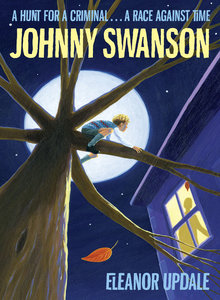
Johnny Swanson

Author: Eleanor Updale


There are some interesting and unusual features to this novel. It is set in England, just after the 2nd World War. Families are struggling without husbands who died on the battle field, soldiers who have returned face the challenge of lost jobs or wounds. Not every character we meet is admirable. There are crooks, school bullies, and police who leap too quickly to conclusions.

Johnny has only his Mum to look after him. He is obsessed with making money to help his Mum, and is a bright boy, so starts his own private scheme of placing ads in local papers that promise impressive outcomes (“make your money go further”) but delivers only a slip of paper saying “roll it down a hill”. He makes up a number of lies to ensure he can cash postal notes and place the ads.

While all this is happening he finds out about TB (tuberculosis), and discovers that his friend, a local retired doctor, is actually experimenting with a vaccine illegally imported from France. The doctor disappears, then a few days later Johnny’s world comes tumbling down. His lies are uncovered, and his friend the doctor is murdered! To make matters worse his mother is suspected of killing the doctor.

The rest of the story unrolls in a somewhat predictable manner. It is certainly a “ripping yarn” rather than a thought provoking narrative, and some of the story links depend on unlikely co-incidences. Still, I read to the end and was interested enough in the detail of the story. There is a puzzling unevenness that I can’t quite explain. Johnny is a likable enough character, and there is plenty of imagination in the details of the story. However I thought the detective/mystery second half depended on a character revelation that was not flagged in any way, so it seemed rather like an author’s manipulation rather than something the reader could understand.

The book would suit younger teens looking for some mystery and adventure writing in a well painted modern historical setting. There is little for parents to be concerned about by way of language or themes, though of course there is at least one murder and a good deal of nasty adult behaviour.

Andrew Lack
Head of the Odell Learning Resources Centre.

Tuesday, November 22, 2011

Caleb’s Crossing

Author: Geraldine Brooks


Readers of fiction written by Geraldine Brooks always discover interesting details of the history of some part of the world. Caleb may be a Biblical name, but it was given to this Caleb by a Puritan, Calvanistic missionary, not by his parents. The setting is the east coast of North America in the seventeenth century.

In 1665, a young man from what is now Martha’s Vineyard became the first Native American to graduate from Harvard College. His was the son of a chieftain of the Wompanoag. The young daughter of the charismatic missionary from whose perspective the book is written is a female in a patriarchal society. Women must provide, men and boys must be educated. At twelve, she encounters the young son of a chieftain, who will be later known as Caleb, and the two forge a tentative, secret friendship that draws each into the alien world of the other. As often as she can, she slips away to explore the island’s glistening beaches and observe its native Wampanoag inhabitants. Bethia’s minister father tries to convert the Wampanoag, awakening the wrath of the island’s strongest pawaaw, against whose ritual magic he must test his own beliefs.

In a journal written on scraps of paper, Bethia records her internal conflicts. How can she teach herself to exist within the narrow confines of the lives women in her world are expected to lead? Her quick mind seeks the knowledge that is imparted to her brother. Her domestic responsibilities are unreasonable, but she is loyal.

The triumph of “Caleb’s Crossing” is that Bethia succeeds as a convincing woman of her time, and also in communicating across centuries of change in circumstance, custom and language. She tells a story that is suspenseful and involving. It is also a story that is tragically recognizable and deeply sad.

I found the beginning of the book contrived. However, once connected with Harvard’s history, found it a worthwhile read.

Reviewed by Gayle Davidson
Odell Learning Resources Centre

Sunday, November 13, 2011

In Japan the Crickets Cry

Author: Ronald Clements, with Steve Metcalf

I was bought up on a diet of amazing mission stories, told earnestly, but mostly not well written. I am delighted to discover “In Japan the Crickets Cry” which is a really well written, engrossing missionary story. What makes it all work so well? Certainly Steve Metcalf’s story is quite remarkable: raised in Taku (south-west China) by missionary parents, sent to Chefoo school, there when the area was taken over by Japan. He lived in a concentration camp for a while, but was eventually re-united with his family in Australia. His God-given passion then became the people of Japan: an extraordinary move in the post war atmosphere of recrimination, not reconciliation, as more and more became known about the horrors of torture, forced prostitution and concentration camps. He devoted his life to preaching and serving in Japan, a country to this day notoriously unreceptive to the Christian message.

I have to declare my initial interest was simply my own personal fascination with Japan, but Steve Metcalf’s story touched me on many levels. He does not spare himself as he tells the story of his early heartbreak when a young women who he was deeply in love with turned her back on him as she could not face the idea of being a missionary wife. I am always moved to read about the dilemmas facing missionaries when it comes to their own children, and Steve not only lived these difficulties himself, but later on had to make the same agonizing decision about his own children.

I appreciated the fine balance kept between large picture analyses of the missionary work in Japan and the illuminating minutiae of daily life… and found especially helpful the sections where he reflects on the psychology and sociology of the Japanese people as they struggled to deal with the aftermath of war. The book is not overloaded with detail about language and custom but again the balance is stuck quite well for those who are interested in Japan for its own sake.

Steve Metcalf “retired” in 1990 but has continued to work with Japanese people in the UK and Europe, and the closing chapters detail some of these stories.

Suitable for any age; parents could read snippets to younger children. The book is a rich source of discussion points for the thoughtful teenager (or adult).

Andrew Lack