Showing posts with label Australian. Show all posts

Monday, July 30, 2012

The Shadow Girl


Author: John Larkin

I’ll break some rules here, and review a book that I’m not putting in the library. Don’t get me wrong, it is a book I read to the end with interest, and there is nothing in it that makes it inappropriate for adult readers. The problem I see is that it takes a real issue (and starts with a real story) and puffs it up into a sensationalised drama. Even this is not the heart of the reason I struggle with the book… it is just that it is plainly intended for teen readers.

A bit of context is in order. John Larkin is a prolific teen fiction/ young adult writer. The book was inspired by meeting a girl who told him her story about being a run-away. There is no suggestion however that this is a biography. It is simply a story that starts with the idea of an intelligent girl who runs away from home to escape a predatory uncle/guardian. We are introduced to her through a number of scenes where she describes her life to the author, but segue into first person narration. I find the mechanism a little contrived. In order to tell the story with a sense of development certain details are held back even though we can see the author and the story teller are both aware of the details in the narrative “now”.  I am not adverse to complex narratives (loved All That I Am) but clunkiness is always annoying.

I found myself reeling with the series of tragedies and confrontations the girl has to deal with… not just exposure to a sexual predator, but violence, murder, rape, betrayal and institutional neglect. I am pleased that there are some adults who provide a degree of kindness or even shelter for the girl, so the book is not without its sense of hope. Religion gets some pretty stern serves and the only religious leaders shown are either uncaring or, in one case, sexual predators themselves.

A friend of mine found the book fascinating, and I found it interesting, but showing all the hallmarks of a recent trend to offer teens books with levels of adult themes, sex and violence that not that many years ago would have been questioned in books for adults.

Andrew Lack
Head of the Odell Learning Resources Centre

Monday, June 4, 2012

Past the Shallows

Author: Favel Parrett


Beyond the shallows, as we all know, you get into deep water. A family ekes out an existence diving for abalone in the south of Tasmania. Harry, the smallest boy of the family is protected… he has not been forced to go on the boat because of his sea-sickness, and his older brother Miles protects him from their sometimes violent father. The sea is everywhere, but it seems the land is not necessarily safer.

This first novel has been shortlisted for the Miles Franklin award this year, and it is a sad but familiar story. We slowly discover through emerging memories the events of the past that have shaped the unhappy present. There are many glimpses of the familiar for Australian readers: familiar show bags, familiar rural scenes, familiar guarded comments  from the adults who surround the family.

The narrator’s role is passed deftly but abruptly between three boys, so the twin narratives of history and the present are formed from fragments. As the book progresses these start to make a complete story but it is still up to the reader to assemble the whole. The author does an excellent job of conveying the different degrees of innocence and perspective of the two boys.

There is little graphical “adult” material apart from some swearing. The issues and themes, however, and tragedies that befall the characters, means this is more of an older teens or adult read.

Andrew Lack
Head of the Odell Learning Resources Centre

Wednesday, April 25, 2012

The Dead I Know


Author: Scot Gardner


This book is simultaneously satisfying and disturbing. It touches on death, physical abuse, loneliness, alcoholism and self-doubt, and yet all of these grim themes are set against a sometimes mundane world where at least one family cares for the increasingly desperate Aaron.

Aaron is a teenager who has left school before Year Twelve. He has opted to take a job in a local funeral parlour, and it is here that he must confront death and the discomforting challenges of the trade. Compared to other parts of his life, the small family run business is actually a haven. Aaron struggles with inner and external torment. He has shocking dreams that start to push a door open to something he does not want to remember. He lives with his carer in a caravan park and there attracts the hostility of teenage thugs and a vindictive supervisor.

The story unfolds with a series of ever more intense confrontations and challenges for Aaron. Some of the detail is, I feel, far too gritty for younger readers, but John Barton, the owner of the funeral home, is doing his best to understand Aaron’s defensive secrets and silence, knows things are not going well, and is determined to help if he can.

Aaron is an engaging character, and the reader is likely to be barracking for him right through to the last page. My personal unease was that for the purpose of the story Aaron faces a perfect storm of emotional and physical struggle, so the events are well beyond the sort of thing a normal teen reader may have ever experienced. We accept this in an action story or a sci fi space opera, but this book is seemingly about an ordinary boy in an ordinary suburb.

Emotionally intense and including scenes of murder, physical violence and death. Short listed for this year's CBCA awards.

Andrew Lack
Head of the Odell Learning Resources Centre

Wednesday, February 15, 2012

The Coming of the Whirlpool

Author: Andrew McGahan


Dow Amber is the son of timber getter. When he is of age he follows his father and the men of the village up to the plateau to fell trees. While there his heart is stolen... not by a girl, but by an unexpected glimpse of the wild, surging ocean at the base of a headland. His safe world is unmade, and his fate is now to walk in strange and difficult paths. 

Andrew McGahan is an Australian author with several adult novels to his credit, including the Miles Franklin winner The White Earth. This book is the start of a fantasy series aimed at teens. When I say fantasy, I need to clarify that there are no elves, dragons or magic rings in this book, and no magic or monsters (though he may have some in store for later books). It is however set in a world that is almost but not quite Earth... a world with a much reduced level of technology.

In that world the Ship Kings have come to dominate and rule over other island people, and Dow’s fascination with the sea is going to bring him into rapid conflict with these inflexible rulers who allow no one else to even sail out at sea.

The writing is for the most part confident and effective. The various characters are interesting, the situations mostly believable, and there is a sense of several sub plots emerging. The language is more formal than I may have expected, but this is McGahan’s ploy to create a distinct “story telling” tone. It is clear from the cover (Ship Kings Book 1) that this is going to be a series, but he completes the story for this book in satisfactory way. My only real reservation is that in the most dramatic adventure or action section (the actual whirlpool of the title) I think both the physical phenomenon and the human action are a bit over the top. Still, he warns at the start that this is a different world with different rules. 

I will be interested to see how the story continues. It is a bold move to write a book that is in so many ways a fantasy adventure, yet to avoid the supernatural, fantasy world creatures and magic. There are likely to be larger forces at work, but so far they are described as fate, blood inheritance and a curse... and these are ideas expressed by characters, not directly by the author.
A good read for Year Five and above, and an interesting opening salvo from a good Australian author.

Andrew Lack
Head of the Odell Learning Resources Centre

Tuesday, November 8, 2011

Advance Australia…Where?

Author: Hugh Mackay


I have discussed in other reviews the idea of a “dipping book”, one that can be read by taking pages almost at random. Hugh Mackay’s most recent social analysis book came out in 2007, but I am still finding it fascinating and fresh.

The author’s special gift is to connect seemingly disparate trends, thus suggesting causal connections that I find illuminating. In case you are not familiar with his work, he is a psychologist and social researcher, and produced for many years a quarterly report on trends in Australian society. He has a wealth of research data both from his own social research and focus groups, and from the work of other researchers.

To give you an example, I have been aware for some years about statistics on the growing number of single occupancy households… in 2007 around 20% of Sydney dwellings had only one occupant, but the number is predicted to grow dramatically by 2020. This is interesting, even alarming, but the reason I enjoy his book so much is that it is not merely a report on the “what” (statistics) or “what next”, he also offers suggestions for the “why”. In this case he targets the society wide focus on self fulfilment and self worth, and suggests that this has led to an increased preference for being comfortable by one’s self. Of course there are many other reasons and he canvases those as well.

While 2007 is not 2011, it is interesting to examine the chapters that touch on the emerging Internet and social media culture, with its benefits and horrors.

I have taken to reading a page or two while eating my breakfast cereal, and enjoy jumping to random sections… almost always providing a challenging insight into the culture I move and work in. There is no reason why this could not be ready by a student of any age, however interest is likely to be higher for older students who are already curious about the forces shaping and driving our corner of the world.

Andrew Lack


Sunday, October 9, 2011

A Straight Line to My Heart

Author: Bill Condon


You know it is not an American or British book when the man in charge of the Football Club is a "Prezzie", and where one of the main characters is called Reggie and is obsessed with finally getting his Ford back on the road after years of trying to restore it.

Tiff (never Tiffany) has just finished Year Twelve, and is about to start some work experience at the local newspaper. She has a complicated family setup but is well cared for by Reggie and Bull. Being Australian males they show their genuine affection by constant teasing.  Life is about to take a number of twists and turns, which will lead to self doubt, sorrow, laughter and reflection.

The story is told in the first person, so we get to know the small country town where Tiff lives through her eyes. I can only imagine that the book would be a bit of  puzzle to a reader from another country, as Tiff's vernacular is a distinctively Aussie, without being contrived. While the events that take place are largely of only local concern, they impact Tiff dramatically, so ultimately this becomes a book about change and the inevitable progression of living.

The author has deliberately chosen to write a story that is positive, and has comendably avoided the swearing, drugs and sex scenes that are increasingly common in teenage stories. This does not make it any less real, and some big issues are touched on including alcoholism, single mothers with children from multiple partners, smoking and cancer. It is interesting to compare this story to Fill Out This Application and Wait Over There (reviewed) which is also about a student after Year Twelve and a newspaper job, though in an urban environment.

An easy and pleasant read for teenagers (even young ones) with a little romance and a lot about life, all the more engaging for being distinctively Australian.

Andrew Lack

Sunday, September 18, 2011

The Man Who Loved Children

Author: Christina Stead


(disclaimer: I simply can't do a 350 word review of this book!)

I heard this book discussed on the ABC’s First Tuesday Book Club, and I was not surprised to hear it passionately defended by two guests, and savagely attacked by another. I bought this book for the school library because I believe it to be an outstanding (nearly) Australian novel. I suspect it will only be read by Extension English students, but I would encourage parents with a literary bent to borrow it. What is all the fuss about?

Those who do not like it find it intricately detailed and overwhelming in size… the larger format paperback I have is over 500 pages in length. It is also distressing because the story is a painfully close look at a family that we would now call dysfunctional. The cruelty to the children is not really physical, certainly not sexual… rather they are drafted into a world of warring parents who use endless tricks to co-opt the children to their side. This is all the more difficult because the parents each believe they are on high moral ground and do what they do for the sake of right and for the children… especially Sam, the father who loves his children so much that he cannot leave them alone for a moment to have their own thoughts or feelings.

I have long wondered why I loved this book from the first time I read it over 30 years ago. I think I know now… it is the extraordinary language that Sam (the father) uses with his family. This is not a trivial rendition by Christina Stead of a family’s “in house” language… not just the application of a few nick names or a special name for a mood or event. She actually creates a totally believable stream of language for Sam, who plays with words constantly, twists and distorts words, brings in without explanation scientific names, patches of Malay, literary references and phantasms of his own imagining. The effect of reading his monologues is like being immersed in a modern stream-of-consciousness text, or perhaps slabs of Finnegan’s Wake.

Stead does not speculate on the impact this strange life of inconsistent messages, cloying love and adult fury will have on the children. Ultimately she is telling the story of the eldest, Louise, who is very bright, constantly reading, and constantly called on by her parents to be a “little mother”. Her response is to shoulder responsibility beyond her age: defending the other children and challenging her parents. It is her story that ultimately reaches a tragic climax that brings the book to a close, without any hint of what will happen next.

There is just one clue… but it is not in the book, it is in the writer. There is a reasonable ground to believe that Stead drew on some aspects of her own childhood, and if that is true, then “Louise” went on to become a political activist and writer… and someone who lived most of her life away from her homeland.

Suitable for older students, the difficulty will be the size of the book and the characters who are appealing at times but enmeshed in tragedy none of them seem able to escape. The language is wonderful and worth close study.

Andrew Lack

Monday, August 29, 2011

The Great Expedition

Author: Peter Carnavas

This book is about a team of brave young explorers, a group of little kids who have been directed by their mum to deliver a parcel to their grandma. Some of the explorers don’t make it and in the end there are only two explorers left who have made it across the wild country.

This may sound serious but when you look inside the book you find the wild country is in fact a local playground. The inspiration for this story has come from the story of Burke and Wills, the two men who led an 1860-61 expedition to become the first Europeans to cross the Australian continent from south to north.

The illustrations are delightful and there is a great play between the words and pictures. A wordless double page illustration shows the land the children have crossed. This is suitable for young folk age four and up.

Helen Sillar

Wednesday, June 22, 2011

Words Fail Me: A Journey Through Australia's Lost Language

Author: Hugh Lunn

This is a solid book, at over 400 pages, but is designed to be fun to read rather than a dense academic work. After his earlier book “Lost for Words” about phrases from his own childhood, the author was inundated with letters from people wanting to share their own memories. He has managed to categorise all this material into chapters like “Wisecracks”, “Name-Calling” and “Parenting” then into sub sections within each chapter. There are photos in each chapter, with added speech balloons, and the text includes both lists of words and phrases and excerpts from letters with personal stories.


I’m not sure I would ever read this cover to cover, but it is a great “dipping” book. Some of the material is poignant but most is entertaining. Australians have a wonderful turn of phrase! I always like the creative nicknames, such as the carpenter called Lightning, ‘cause his hammer never struck in the same place twice… or the thieving workmate called Hydraulic… always lifting things.


I have seen books of Australian slang and phraseology that are rife with the most horrendous foul language and vulgar and demeaning epithets. Lunn has taken a gentler approach, and the worst of the language has been left out. There are still sections on “the dunny” and things inside it, as well as milder swear words, so this is probably not for the younger readers.


I must say one of the reasons the book appealed to me was the discovery of a lot of language from my own childhood home… such as saying after dinner one was “full up to Dolly’s wax”. I’m also collecting great Dad jokes such as “What is the hardest thing in the world to do… Shell Petrol or Milk Arrowroot Biscuits?”


This is an engaging collection of language and stories that will bring back memories for many of us. Just remember before reading it out loud at the table there is a good smattering of mild swearing and references to a range of body parts and functions.
Andrew Lack

Monday, February 28, 2011

Cindy- Ella An Aussie Cinderella

By Tom Champion

The Aussie Gem series is oozing with Aussie bush charm from every page. These stories are packed to the rafters with images of life in the Australian bush, Aussie alternatives to common words and an overabundance of koalas, wombats, kangaroos, gum trees and sheep.

This delightful picture book is an Australian version of the Cinderella fairytale. With plenty of Aussie icons, including the wattle, blue thongs and a red kangaroo, this cute version is unashamedly Aussie and is brought to life with humorous illustrations by Glen Singleton.

Cindy-Ella’s stepsisters Rachelle and Sheryle keep her busy feeding the budgies, cleaning the dunny and cooking meat pies, but she dreams of romance with Steve, the best sheep-shearer in Gundaroo. She finally gets her chance when her fairy god-nanna, with a few waves of her wattle branch, gets Cindy ready for the Gundaroo Singles Mingle Ball.

Review by Mrs Sillar

Wednesday, December 8, 2010

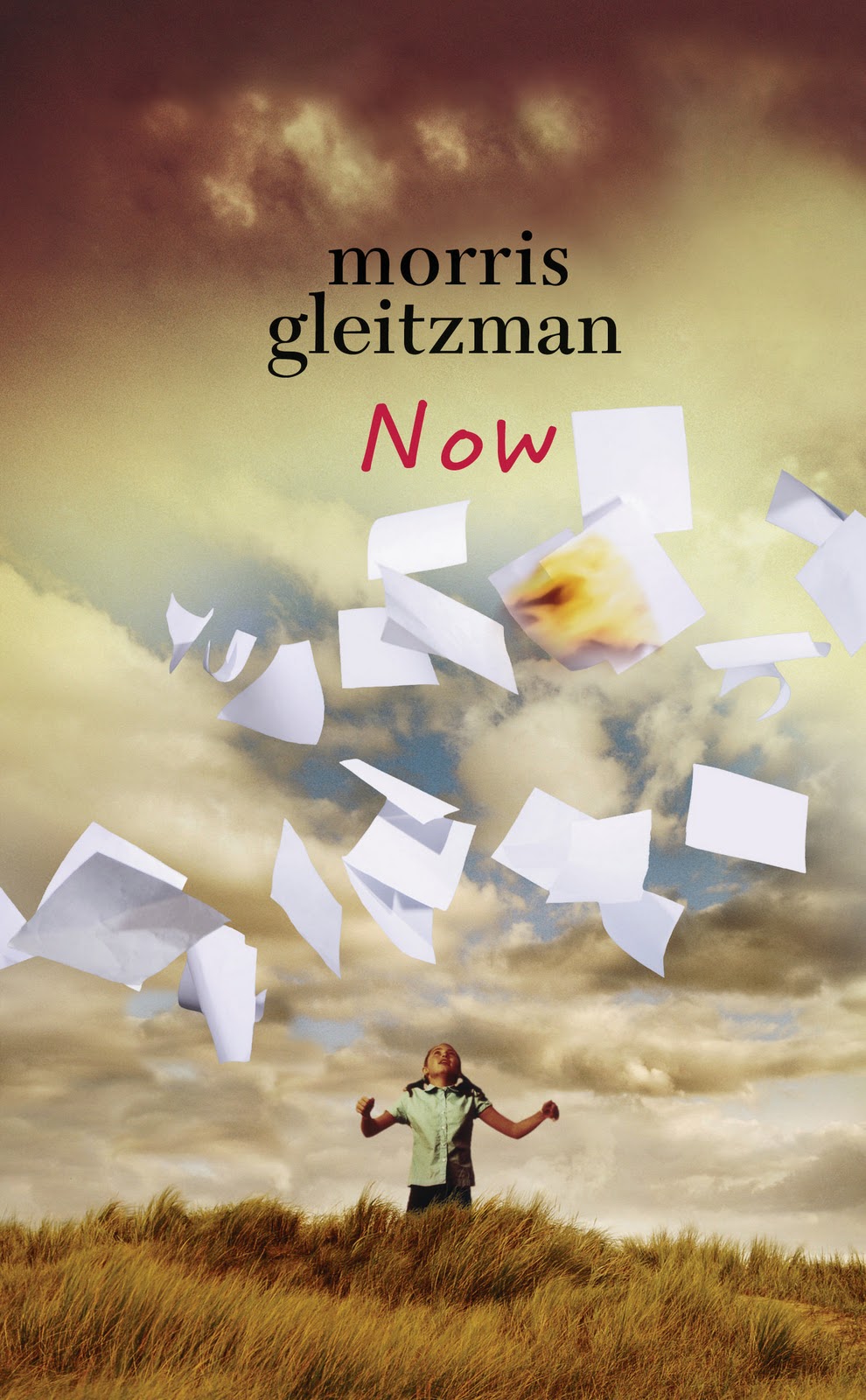
Now

By Morris Gleitzman

If you are only familiar with Gleitzman’s Misery Guts or his other tongue in cheek stories for younger readers, this book will come as a shock. It is a serious, layered, complex and completely engaging story. It is certainly designed for the younger teen reader, though it needs to be understood by parents that some serious topics are under examination, including the terror of a massive firestorm and the harsh reality of its victims.


This is the third in his series of books that touch on the life of Felix, a ten year old boy growing up in Nazi Germany. In Now, Felix is a grandfather, and the story is told by his granddaughter who he is caring for. Part of the drama is in the question of why young Zelda’s parents are not around. As she says at one point “In our family... the parents always leave the kids... I think we should stop it”.


Zelda does her best to cope in a new school, but for some reason an older student Tonya starts to bully her. Things get more and more difficult, but Felix quickly senses what is going on... after all he is an expert in what it is like to live with bullies.


I was in tears by the end of this relatively short novel: Gleitzman shows that he can explore complex “adult” topics of the sort our growing children often encounter, while staying within the confines of the age he chosen to write for. You will want to find out more about the characters, and re-read the tale to savour the details. Suitable for Year Five and up, though parent co-reading would be sensible for those who may not be comfortable with the intense drama in parts of this.

Sunday, October 24, 2010

To the top end : our trip across Australia

by Roland Harvey
Wish you were here! This is just one of the clichés Roland Harvey uses in this delightful travelogue of a holiday from Tassie to the very tip of the Top End.


Henry, Penny, Frankie, Mum and Dad embark on their most exciting adventure yet. Travel with them on the ferry across Bass Strait to the mainland, through Kelly country, along the Murray, into the Flinders Ranges, underground at Coober Pedy, overhead at the Olgas, overland to the Great Sandy Desert, with the fishes at the Great Barrier Reef, deep into the Daintree, out to the islands, kayaking at Kakadu and finally frolicking on the beach at the very top.


Roland Harvey is a great observer of humanity and nature. He uses watercolour to illustrate the diversity of the Australian landscape, and black ink to write for observations through Penny’s eyes. If you have never had the privilege of seeing Australia in real life, enjoying this book will whet your appetite for and Australian road trip. It is so Australian.


Shortlisted for the Children’s Book Council picture book of the year.


Reviewed by Gayle Davidson