Showing posts with label Fantasy. Show all posts

Tuesday, June 19, 2012

Brotherband: The Outcasts


Author: John Flanagan:
Short-listed for the Children's Book Council of Australia 2012 Book of the Year


Following the successful international best-seller Ranger’s Apprentice, John Flanagan’s new series Brotherband will be appreciated by younger and older readers.

Flanagan deals with issues such as bullying and being ostracised. Brotherband is about boys who are seen as losers but battle on to achieve their goals.

When I was twelve years old we moved to a small country town. It has been many years but I still remember the pain when the most popular students chose their teams for softball from the most popular kids to the least popular and no one wanted me! Being thought of as worthless does enormous damage to children. In Brotherband eight boys face the same pain.

John Flanagan creates a world of seafaring adventures, treacherous pirates and epic battles. In Skandia, there is only one way to become a warrior. When boys turn sixteen they are grouped together and chosen for teams called brotherbands. They must endure three months of gruelling training in seamanship, weapons and battle tactics. When Hal Mikkelson finds himself the unwilling leader of a brotherband made up of misfits and outcasts, he must step up to the challenge. His team consists of such boys as the thief, the huge blind boy and the boy who mimics animals. Hal himself is an outcast as his mother is not Scandian. The "Heron" brotherband might not have the strength and numbers of the other teams, but use their strange skills, inventiveness, ingenuity and courage to succeed.

Flanagan will get readers thinking about bullying issues while enjoying a great story. The boys may have fewer in their team and they may be picked on by the other teams but they go about winning points with good humour and against the odds. The story also tells young readers not to give up when things are tough. This is certainly the case when we see the boys sailing away from Scandia ready for the adventures and challenges of the second book The Invaders.

Anne Montgomery
Odell Learning Resources Centre

Wednesday, May 23, 2012

Beyond the Knock Knock Door

Author: Scott Monk


This is a cheerful fantasy romp that starts and ends in an Australian suburb, and spends most of its time in a playfully imagined land…beyond the Knock Knock door. The children involved are triplets, though of three different characters, and are not entirely sure that they like each other or want to work together despite being catapulted into hair raising adventures.
This is not classical fantasy. Monk sets up a mechanism in which one triplet is a pirate, one is a knight and one is a space ranger. A little like the old “Vikings” game that started Blizzard on its journey, each has to use the power of their costumes to solve different challenges along the way. They travel to a land where fish swim in the air and islands float as well… but it turns out the people are not what they seem either. Much more would be a spoiler.
I did not find myself really warming to this yarn. There is no real effort to justify the strange sights or physics of the land, so it is a “what if” land rather than a carefully created world. It is a story where the children have to look beyond appearances to work out what is right and wrong. Though the children are described in an enthusiastic and animated style, there was little subtlety or development.

I am more than happy to have the book on the shelves… it will make a thrilling if quirky read for a middle school student.

Andrew Lack
Head of the Odell Learning Resources Centre
Wednesday, March 14, 2012

The Dragon’s Tooth

 Author: N.D. Wilson

A boy throws two old tires into an empty swimming pool, picks up a ringing phone in a dilapidated motel, and hears the voice of someone demanding to stay that night in Room 111. Cyrus (the boy) is furious when his older brother allows the stranger to stay in the room, as in fact it is his own bedroom, however by the morning, everything has changed. A night of fire, murder and strange events means you have entered an N. D. Wilson story. 

The author’s first series, 100 Cupboards, was an engaging American Fantasy series, and this book is the start of a new series. There are some things in common, but for those already missing the unionised fairies and hand carved wooden typewriter of the first books, I have to point out this book has a very different premise. In both cases the introductory book is especially attractive because it sets up a number of mysteries. In both cases the focus is not on an individual hero but on a family with a secret history… but not a family with innate or mysterious powers. 

Despite the title, the book is not about a world of high fantasy (dragons, elves and spells). Instead it proposes an ancient secret society whose purpose is to incarcerate forces of evil that seek to ravage the world. Their tools include guns, genetically enhanced dragon flies and planes as well as some more mysterious objects such as the dragon’s tooth fragment of the title. The book has at least has a very clear distinction between good and evil, with a particularly nasty master villain who dabbles in genetic modification of those he captures. I’m interested that in an end note the author talks about trying out sections of the book as bedtime stories for his own young children, as there is a quite strong violence and some very nasty characters. 

Some of the mechanisms are familiar from other stories, but both in his first series and in this book Wilson shows many distinctively original touches and ideas. I also enjoy reading his books as an adult, as he is quite capable of using beautifully crafted images and language. If I have a criticism apart from the violence it would be that some of the physical adventures and trials of Cyrus and his sister Antigone are rather over the top, however it does seem ironical to be talking about “realism” when in the throes of a fantasy story. 

So, the start of another series by an interesting writer with a good pedigree: some magic and horror elements and relatively strong violence, clear distinction between good and evil, and writing that is at times quite literary. 

Andrew Lack
Head of the Odell Learning Resources Centre

Wednesday, February 15, 2012

The Coming of the Whirlpool

Author: Andrew McGahan


Dow Amber is the son of timber getter. When he is of age he follows his father and the men of the village up to the plateau to fell trees. While there his heart is stolen... not by a girl, but by an unexpected glimpse of the wild, surging ocean at the base of a headland. His safe world is unmade, and his fate is now to walk in strange and difficult paths. 

Andrew McGahan is an Australian author with several adult novels to his credit, including the Miles Franklin winner The White Earth. This book is the start of a fantasy series aimed at teens. When I say fantasy, I need to clarify that there are no elves, dragons or magic rings in this book, and no magic or monsters (though he may have some in store for later books). It is however set in a world that is almost but not quite Earth... a world with a much reduced level of technology.

In that world the Ship Kings have come to dominate and rule over other island people, and Dow’s fascination with the sea is going to bring him into rapid conflict with these inflexible rulers who allow no one else to even sail out at sea.

The writing is for the most part confident and effective. The various characters are interesting, the situations mostly believable, and there is a sense of several sub plots emerging. The language is more formal than I may have expected, but this is McGahan’s ploy to create a distinct “story telling” tone. It is clear from the cover (Ship Kings Book 1) that this is going to be a series, but he completes the story for this book in satisfactory way. My only real reservation is that in the most dramatic adventure or action section (the actual whirlpool of the title) I think both the physical phenomenon and the human action are a bit over the top. Still, he warns at the start that this is a different world with different rules. 

I will be interested to see how the story continues. It is a bold move to write a book that is in so many ways a fantasy adventure, yet to avoid the supernatural, fantasy world creatures and magic. There are likely to be larger forces at work, but so far they are described as fate, blood inheritance and a curse... and these are ideas expressed by characters, not directly by the author.
A good read for Year Five and above, and an interesting opening salvo from a good Australian author.

Andrew Lack
Head of the Odell Learning Resources Centre

Sunday, February 5, 2012

The Blood Red Road

Author: Moira Young


I finished this book a little confused. Is it a western transported into a dystopian future? Is it Sci Fi but without the aliens and gadgets? Is it a love story? Of course breaking genre boundaries is no crime, indeed can win you the Pulitzer Prize (A Visit from the Goon Squad). The problem here is whether the final result works. The folk who awarded this the 2011 Costa Book Award liked it… I was less certain. 

In a bleak future (presumably America) technology has been reduced to medieval level. Evidence of “The Wreckers” (presumably modern Americans) is everywhere, but mostly as scrap. A small family ekes out an existence beside a drying lake. The older children, Lugh and Sada, are twins. On one disastrous day Lugh is kidnapped and Sada vows to rescue him from the riders who have claimed him for a mysterious purpose. Though she is only eighteen her fighting ability and determination will lead her on many strange adventures as part of this mission.

To make life even more difficult she is also responsible for a younger sister, who she cannot love as she blames her for their mother’s death. She also meets Jack along the way, and Jack she finds fascinating and dangerous in equal proportion. 

The story is told in the first person from Sada’s perspective, and she is given a sort of “western” American dialect. Strangely (for a world so far in the future) there are very few new words, simply contractions like “gonna”, “fer”, “outta” and “git”. It is quite easy to read but I feel the author missed on an opportunity to have a more creative look at our ever mutable language. The stuff in the book could easily come from any western novel. 

The book is not really “Sci Fi” in most senses. There is no new technology, no aliens, just a bleak reduction of the future into the past. I personally also found it rather odd in the way it flicks between the love story between Sada and Jack, and the often quite intense action and violence of the rest of the book. Many of the ideas reminded me of other novels: it is not wrong to borrow, but I expect a blend of new and generic at least. The wise crow? Try The Hobbit. The older sister sacrificing herself for the younger? Hunger Games. The cage fighting in Hopetown? Mad Max Beyond Thunderdome. Even the land yacht is not so far away from Mortal Engines. A population enslaved by drugs? A Scanner Darkly.

I read to the end, but I’m not convinced I’d read another volume (as the series seems destined to continue). Can one come up with truly new ideas in fantasy or “future” novels in an American setting? Certainly! Orson Scott Card does an amazing job in the Alvin the Maker series, and more recently N D Wilson created a fascinating American fantasy with The 100 Cupboards series. I suppose The Blood Red Road comes closest to something like Tomorrow When the War Began. While Hunger Games is possibly more horrifying in the pitting of innocent against innocent, it also has to my way of thinking a much stronger moral centre. 

Suitable for teens and up, with a note that there is a range of intense and fairly graphical scenes of fighting and its consequences. 

Andrew Lack
Head of the Odell Learning Resources Centre

Tuesday, October 18, 2011

The Travelling Restaurant: Jasper’s Voyage in Three Parts

Author: Barbara Else

This fantasy novel details the adventures of a young twelve year old boy, Jasper Ludlow. By all accounts he is an ordinary boy who is trying to cross Old Ocean and Lake Riversea. Readers can follow a map inside the book cover to help track Jasper’s quest to find his baby sister…  and to save the kingdom of Fontania from the Provisional Monarch, Lady Gall.

There are hungry pirates, troublesome monkeys and a whirlpool for Jasper and the crew of the Restaurant to negotiate. Mystery surrounds many of the characters and it is hard to know who to trust.
This is suitable for age nine and up.  
Helen Sillar

Monday, May 2, 2011

Revisiting the Narnian Books

Author: C S Lewis

I have had some interesting discussions about C. S. Lewis’s Narnian books recently. One was with a Middle School girl this morning. She was borrowing “The Voyage of the Dawn Treader” to read because her family was about to watch the video of the recently released film.


The seven Narnian stories were very important to me as a young reader. We were living in Kuala Lumpur at the time, and I discovered the series at a house my parents were visiting. The gentleman there kindly allowed me to borrow one book, and then for the next seven weeks I would finish the book by Monday evening and wait with anxiety for Sunday to come around, as he bought a new book each week to church to lend to me.


What is the correct order to read them? The series scans the whole existence of Narnia… “The Magician’s Nephew” deals with its creation, then comes “The Lion, the Witch and the Wardrobe”. “The Horse and His Boy” occurs during the second book. “Prince Caspian” comes next, and then “Voyage”. “The Silver Chair” follows, and then “The Last Battle” includes the final end to Narnia.

I confess I no longer really enjoy reading “The Lion, the Witch and the Wardrobe”. The language is dated in parts, and in some ways Lewis seems to grown more confident in his style in the books he wrote after this. I think “The Last Battle” contains the most radical and challenging ideas. There is some provocative thinking about faithfulness, humanism and heaven. My all time favourite however is “The Silver Chair”. It is (to me) the most “stand alone” of the stories, and has a wonderful dramatic arc. Some like it less because it does not feature the original four children. I just love Puddleglum the Marshwiggle! (You will have to read it to find out about Marshwiggles). His dialogue with the underground witch queen about knowing what is true and right by faith is very powerful.

As a set, definitely worth a revisit!

Tuesday, March 15, 2011

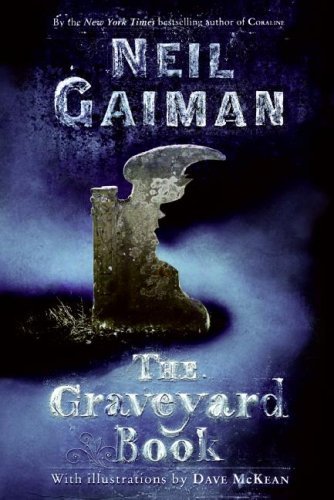
The Graveyard Book

Author: Neil Gaiman

I have been struggling for a while to explain to others what genre Gaiman writes in. I very much like Neverwhere and Anansi Boys, and have been looking forward to this book, written more for teenagers. The best way I can explain what he does is to say that Gaiman writes modern “ghost stories”. Not horror stories, not “occult fantasy” but stories about people who encounter ghosts. This is certainly true for Coraline (reviewed last year).
 
In The Graveyard Book, a family is murdered by a mysterious figure, and only a toddler escapes. The toddler makes his way to a nearby cemetery inhabited by the homely and idiosyncratic ghosts of each person buried there. The child is adopted by a ghostly couple, and is protected by them from the murderer who is still seeking to destroy the boy.

So the child grows up and does his schoolwork with various odd and intriguing characters from various periods of English history. Bod (short for “Nobody” the name he has been given) gets into all sorts of scrapes, and challenges the ability of his slightly transparent adopted parents to keep him safe. As he enters his teen years he inevitably tries to go into the local village, with curious consequences.

This is written with Gaiman’s normal confidence and flair. I found it slightly uneven, as sometimes he seems to be writing down (given its younger teen intended audience). At other times the characters and events are delightful and the challenges Bod faces are engrossing.

I can’t see this is my favourite Neil Gaiman book, but I was glad to have read it. It is not a book whose main purpose is to be scarey, though Bod faces some scarey situations and foes. It certainly does contain a werewolf and a reformed vampire, as well as the viscious murderer we originally meet and his dark organisation. Miss this one if you find any reference to these things unpleasant, otherwise it is a good yarn from a very competent writer aimed at younger teens.

Andrew Lack
Head of the Odell Learning Resources Centre

Tuesday, February 22, 2011

The Chestnut King

N. D. Wilson
Couldn’t put it down, and no, it wasn’t because of the honey sandwich I’d just eaten. I reviewed book two in the 100 Cupboards trilogy feeling that I had lost something I loved in the first book, the sense of mounting mystery. This third book managed to win me back completely with its combination of fantasy based action adventure, unexpected twists, original ideas and well crafted writing.


In Dandelion Fire we leave Henry relatively settled and safe: within pages of the start of The Chestnut King every single person he cares for is in terrible danger, and the family has been split up and by choice or force are heading in three different directions. We are introduced to an apparently invulnerable new foe. However, I was especially pleased to find that there was lots more about the “faeren”, the quirky “fairies” of Wilson’s world who are run more like a trade union than a fairy court. I just loved the description of Thorn and his hand carved “inscriptor” which turns out to be a wooden typewriter!


As with Dandelion Fire I have to warn that this is not a sweet tale for little children. There are battles, injuries, deaths, blood, and spine chilling dangers that Henry and his friends and family have to face. The book is also the longest of the three, so again I would think more suited to Year Seven and up than younger readers.


For older readers there is an opportunity to see what good fantasy writing is all about: there is no slavish following of hackneyed formulas, the characters are developed with distinctive voices, there are passages of really fine and poetical writing, and, I’m pleased to say, no danger of confusing right and wrong, good and evil. The normally vexed problem of how people move from world to world is dealt with in a creative way, with lots of tongue in cheek fun concerning the apparent disappearance of Henry’s Kansas home and how the local community deals with that.


Andrew Lack
Head of the Odell Learning Resources Centre.

Monday, February 7, 2011

Dandelion Fire

by N. D. Wilson
I have been thinking hard about what to say about this book. The first in the series, 100 Cupboards, was fascinating and mysterious. Much that was hidden and unexplained in the first book is revealed and explained in this. In a strange way, that almost seems like a weakness.


Part of good fantasy writing is to create the sense of a complete world. Paradoxically this is done best by having much more to hint about than you have time to explain. When the author decides to explain all the odd events of the first book, it leaves me wanting more mysteries! However, the writing is good, we meet more great characters, and the adventures become much more intense.


In book one, young Henry is staying out on a farm. He discovers the wall over his bed is covered with little doors and that each door leads to a different place. Strange events pile up rapidly after he receives a warning letter through one of the doors.


In Dandelion Fire, Henry decides he needs to explore further, but unfortunately everyone in the house becomes involved, and matters can only be resolved by going into the considerable danger of the worlds behind the doors.


This is a book from a very original and imaginative writer. There are some interesting uses of language, haunting poetic phrases, and races and roles quite unlike the standard fantasy fare. For instance the Faeren are the “fairies” of the novel, but are nothing to do with the gauzy creatures of children’s tales. They are face pulling gnomes obsessed by petty rules and restrictions.


I will warn that while the “sides” are very clearly drawn (good is good, evil is evil), there is a good deal of killing, and Henry and others in the family get fairly battered at different times. Because of the violence level I would be suggesting this for Year Seven and up. Adult readers who enjoy fantasy should certainly have a look at this series, they will find the writing and ideas worth the read.


Andrew Lack
Head of the Odell Learning Resources Centre

Wednesday, October 13, 2010

Coraline – The Graphic Novel

by Neil Gaiman, Illustrated by P Craig Russell.


Neil Gaiman is a fascinating writer who brings a breath of fresh air into the realm of fantasy. Books like Neverwhere and The Anansi Boys weave fantasy stories around humorously portrayed adult characters who live (at least some of the time) in the ordinary world. His novel Coraline is actually about a teen age girl, and has some of the trappings of a fantasy or ghost story.


Coraline is bored, and discovers the door that should lead into a brick wall now leads into the mirror of her house, where odd versions of her mother and father greet her. She realises that all is not well, and has to surmount a number of obstacles in order to rescue her real mother and father. Gaiman offers lots of thought provoking images and ideas: while this can be read in an hour, I felt like reading it again on the spot.


Unlike a lot of “sword and sorcery” fantasy this book is very much in praise of the real world, and values like bravery, affection between family members, and caring for others. Unlike many teenage books produced recently, Coraline’s parents are caring and sympathetically drawn.


The original novel Coraline has also been realised as a stop-motion animated film. This graphical novel does not use the images from the film, and retains all the original details of the novel that were altered in the film.


It will certainly not be to everyone’s taste, but would suit teenage (and older) readers.